HVAC Replacement Cost 2026: Honest Prices From a Tech
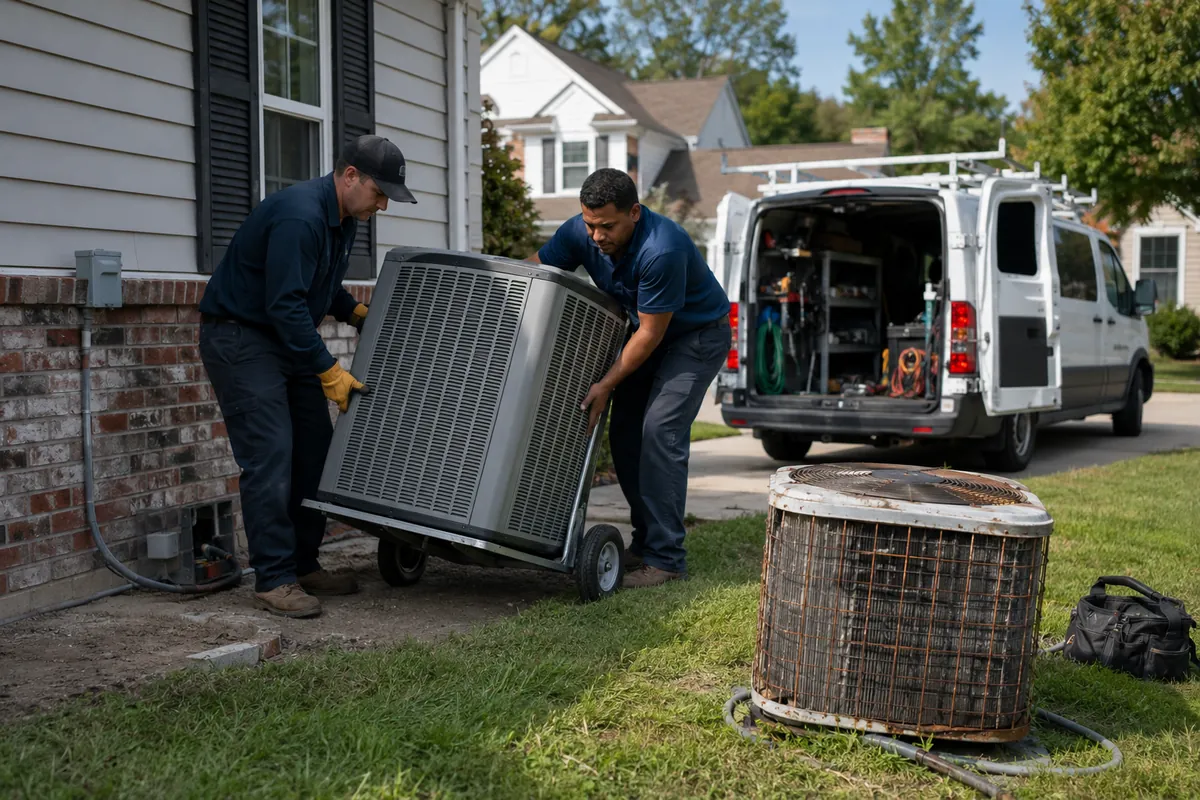
HVAC replacement cost: in 2026 a straight AC swap typically runs about $4,500 to $8,500, a gas furnace $4,000 to $7,500, a full furnace-and-AC system $9,000 to $16,000, and a heat pump system $9,500 to $18,000 installed, with the spread driven mostly by sizing, efficiency tier, and your existing ductwork.
I've been installing and servicing residential HVAC for 18 years. Furnaces, heat pumps, straight-cool AC, ductwork, the works. In that time I've pulled out plenty of units that died at 12 years and plenty that ran 22 years because somebody sized them right and changed the filter. I've also watched homeowners get talked into a $14,000 system when a $250 capacitor would have carried them another three summers. So this is the honest version of what replacement costs, what drives the number, and how to tell when you actually need one.
These are working ranges, not quotes. Your region, your labor market, and the shape your house is in all move the needle. Treat them as a sanity check against the bids you collect.
What You're Actually Paying For
A replacement invoice is rarely just "the unit." Equipment is usually less than half the total on a typical job. Here's where the money goes:
- The equipment. Condenser, coil, furnace or air handler. The brand matters less than people think; the installer matters more.
- Labor. Two techs for a day or two, plus the crew lead's experience. Good labor is not where you cut.
- Ductwork. If your ducts are undersized, leaky, or wrong for the new system, the price climbs. Sometimes a lot.
- Line set. The copper running between the indoor coil and the outdoor unit. Often reused, but a refrigerant change or a corroded set means new copper.
- Permits and inspection. Real contractors pull a permit. It costs money and it protects you.
- Accessories. New thermostat, condensate pump, surge protector, whip, disconnect, pad. Small line items that add up.
If a bid is suspiciously low, one of these got skipped. Usually it's the permit or the proper line-set and electrical work.
Cost by System Type
Here's the rundown by what you're actually replacing. These are typical 2026 installed ranges for a single-family home.
| System | Typical installed range | What moves the price |
|---|---|---|
| AC only (condenser + coil) | $4,500 to $8,500 | Tonnage, SEER2 tier, coil access |
| Gas furnace only | $4,000 to $7,500 | AFUE, single vs two-stage, venting |
| Full system (furnace + AC) | $9,000 to $16,000 | Matched tonnage, ductwork, efficiency |
| Heat pump system | $9,500 to $18,000 | Cold-climate rating, backup heat, electrical |
| Air handler (for heat pump) | $2,500 to $5,000 | Variable-speed blower, coil match |
The heat-pump numbers run higher partly because a good cold-climate unit costs more and partly because the install often involves an electrical upgrade. If you're weighing the two heating approaches, my piece on heat pump versus furnace breaks down the operating-cost math by climate.
SEER2 and AFUE, in plain terms
Two efficiency numbers drive equipment cost. SEER2 measures cooling efficiency (the federal minimum has been 14 to 14.3 SEER2 depending on region since the 2023 standards update; the Department of Energy's central AC efficiency standards lay out the regional minimums). AFUE measures how much of your gas a furnace turns into heat; an 80% furnace dumps a fifth of the fuel out the flue, a 96% condensing furnace dumps almost none.
Higher numbers cost more upfront. The jump from a 14.3 to a 16 SEER2 AC is usually worth it in a hot climate where the AC runs five months a year. The jump to an 18-plus variable-speed system is a comfort and quiet upgrade more than a payback play. Don't let anyone sell you top-tier efficiency on a pure savings promise unless your utility rates and run hours actually support it.
Sizing Is the Whole Ballgame
This is the part the cheap-quote crowd skips, and it's the part that wrecks the most comfort. The size of your system needs to come from a Manual J load calculation, not from "your old one was a 3-ton, so here's a 3-ton," and definitely not from "bigger is better."
Oversizing is a real and common mistake. An oversized AC cools the air fast, hits the thermostat setpoint, and shuts off before it has pulled the humidity out. You get a cold, clammy house that short-cycles. The compressor turns on and off constantly, which wears it out early. An oversized furnace does the same thing: blasts heat, satisfies the thermostat, shuts down, and leaves you with hot-and-cold swings and a blower that never settles.
A Manual J calc accounts for your square footage, insulation, window area and orientation, ceiling height, air leakage, and local design temperatures. A contractor who does one is doing engineering. A contractor who eyeballs it is guessing, and the guess is almost always too big because nobody ever got a callback for a unit that was slightly too small to overcool.
> Ask every bidder: "Are you sizing this off a Manual J, or off the old unit?" The answer tells you who to trust.
Repair vs Replace: The Honest Test
Fear-selling a replacement is the oldest move in this trade, and I hate it. A tech finds a bad part on a 9-year-old unit and suddenly it's "you really should just replace the whole system." Sometimes that's right. Often it's not. Here's how I actually decide:
- Age. A well-maintained AC or furnace runs 15 to 20 years. Heat pumps often 12 to 16 because they run year-round. Under 10 years, lean hard toward repair.
- The 50% rule, used honestly. If a single repair costs more than half a new system AND the unit is past 12 years, replacement starts to make sense. A $400 repair on a 14-year-old furnace is not a "replace" trigger.
- Refrigerant type. Older R-22 systems are expensive to recharge because the refrigerant is phased out. A major leak on an R-22 unit is a legitimate replace conversation.
- Repeat failures. Third compressor-related repair in two years? That's a pattern, not a part.
- Comfort problems you can't fix. If the system was oversized and miserable from day one, a right-sized replacement can be worth it on comfort alone.
One repair does not equal a death sentence. If a tech jumps straight to "replace" without showing you the failed part and a repair price, get a second opinion. My guide on how to find a good HVAC contractor covers the red flags in detail.
A few small things genuinely extend the life of what you've got. A surge protector on the condenser, a hard-start kit on an aging compressor, and a clean filter do more than any miracle additive. A simple HVAC surge protector is cheap insurance against the voltage spikes that kill control boards.
How Pros Actually Bid the Job
When I walk a replacement, here's the order of operations a real bid follows, so you can tell a thorough one from a napkin guess:
- Load calc first. Square footage, insulation, windows, orientation, infiltration. This sets the tonnage and BTU.
- Inspect the ductwork. Static pressure reading, supply and return sizing, leakage check. New high-efficiency equipment on bad ducts performs like cheap equipment.
- Check the electrical and line set. Panel capacity, breaker, disconnect, copper condition.
- Confirm venting and condensate. Especially on a condensing furnace, which needs a drain and proper PVC venting.
- Itemize the quote. Equipment, labor, ductwork, permit, accessories, all on one page, in writing.
If the new air handler or furnace has a variable-speed blower and a fresh return setup, this is also the moment to upgrade the controls. A good smart thermostat compatible with heat pumps pairs well with staged or variable equipment, and our best smart thermostats for 2026 rundown covers compatibility traps before you buy.
Permits, Rebates, and the Final Number
Pull the permit. I know it adds cost and time, but an unpermitted install can void your equipment warranty, fail a home inspection when you sell, and leave you with nobody accountable if the work is wrong. It also forces a third party to verify the job.
On the savings side, ask about utility rebates and the federal tax credit before you sign. Heat pumps and high-efficiency equipment often qualify for meaningful credits and local rebates that can knock real money off the net cost, and the ENERGY STAR federal tax-credit page spells out which efficiency tiers qualify. Your contractor should know which models qualify; if they don't, that tells you something too.
Frequently Asked Questions
How much does it cost to replace an HVAC system in 2026?
A straight AC swap typically runs about $4,500 to $8,500, a gas furnace $4,000 to $7,500, a full furnace-and-AC system $9,000 to $16,000, and a heat pump system $9,500 to $18,000 installed. The spread is driven mostly by sizing, efficiency tier, and the shape of your existing ductwork. Treat these as working ranges to sanity-check bids, not as quotes, since your region and labor market move the number.
Why are HVAC replacement quotes so different from each other?
Because the equipment is usually less than half the total, and the rest, labor, ductwork, line set, permits, and accessories, is where bids diverge. A suspiciously low quote almost always skipped one of those, usually the permit or the proper line-set and electrical work. That's why an itemized, written quote matters: it lets you compare line by line and see what a cheap bid left out.
Should I repair or replace my HVAC system?
Lean toward repair if the unit is under 10 years old, and toward replacement only when a single repair costs more than half a new system and the unit is past 12 years. A $400 repair on a 14-year-old furnace is not a replace trigger, but repeat compressor failures, a major leak on phased-out R-22 refrigerant, or comfort problems from an oversized system can justify it. If a tech jumps straight to replacement without showing you the failed part and a repair price, get a second opinion.
Does a bigger HVAC unit heat and cool better?
No, oversizing is one of the most common and damaging mistakes in the trade. An oversized AC cools fast, hits the setpoint, and shuts off before it pulls the humidity out, leaving you cold and clammy with a short-cycling compressor that wears out early. An oversized furnace blasts heat and swings the temperature. The right size comes from a Manual J load calculation, not from rounding up to be safe.
Why does a Manual J load calculation matter for the price?
A Manual J sets the correct tonnage and BTU by analyzing your square footage, insulation, windows, air leakage, and local design temperatures, which directly determines what equipment you buy. A contractor who does one is doing engineering, and one who eyeballs it is guessing, almost always too big. Right-sizing protects both your comfort and your wallet, since an oversized system costs more upfront and runs worse.
Do permits and rebates change the final HVAC cost?
Yes, both move the number. A permit adds cost and time, but skipping it can void your warranty, fail a home inspection when you sell, and leave nobody accountable if the work is wrong. On the savings side, heat pumps and high-efficiency equipment often qualify for federal tax credits and local utility rebates that knock real money off the net cost, so ask which models qualify before you sign.
So where does that leave you? Budget the ranges above, insist on a Manual J, get the quote itemized, and never let a fear pitch rush you into a replacement a repair could have handled. The right-sized system from a careful installer will outlast and outperform the biggest, fanciest unit slapped in by somebody in a hurry. Get two or three real bids, compare the line items rather than the bottom line, and pick the crew that did the homework.